 Recovery Policy

Recovery policy will be checked against each incoming alert events. An alert will be considered as REC alert when a REC alert event is merged into it. It will remain as REC alert until a non-REC alert event is merged into it, or the alert lifecycle ends due to cluster closure.
Recovery Policy configuration screen enables the user to define the conditions based on which an alert is to be marked as a recovery alert.
To define a new recovery policy,
- Select Configuration tab in AIOps
- Select Recovery Policy on the left pane by expanding Alert Types.
Recovery Policy screen will appear displaying all the configured policies.
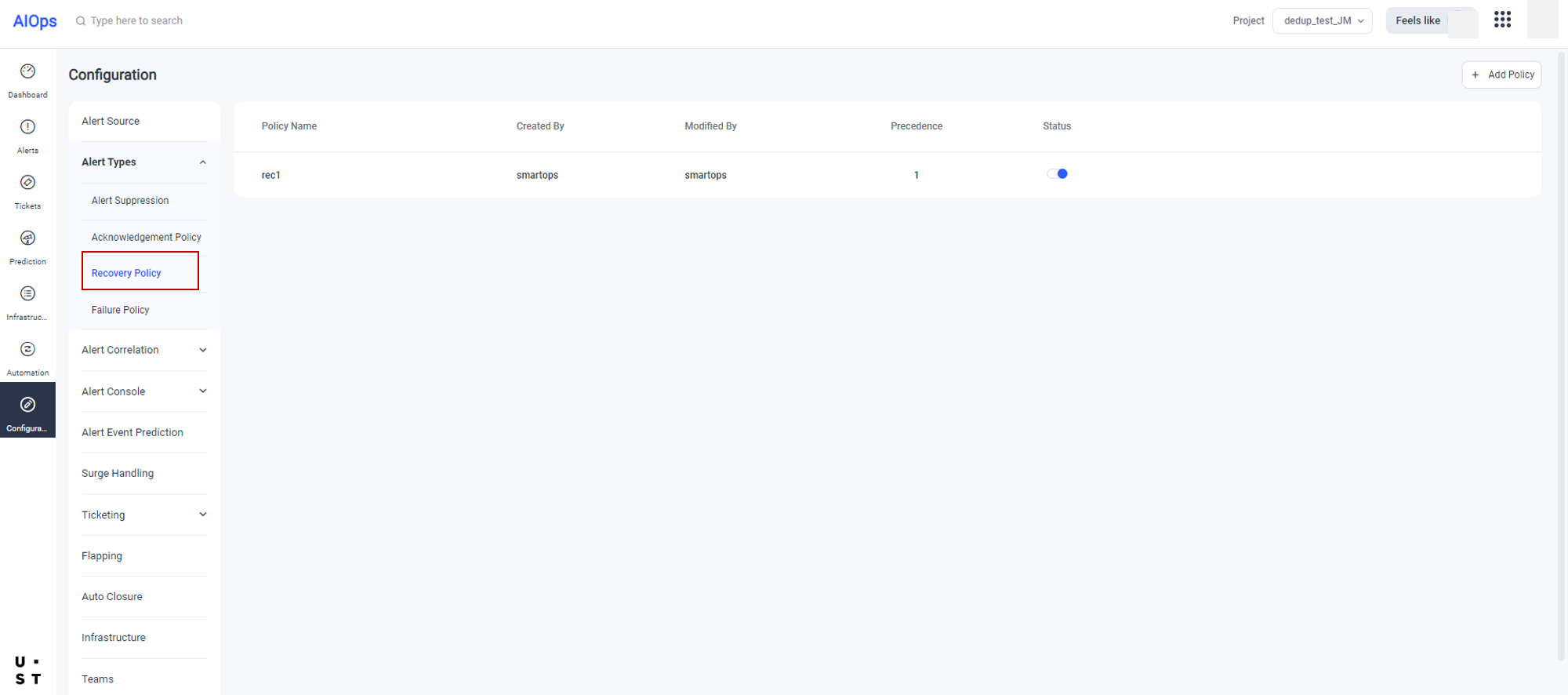
To add a new policy, click on  . Add Recovery Policy screen will appear as shown below.
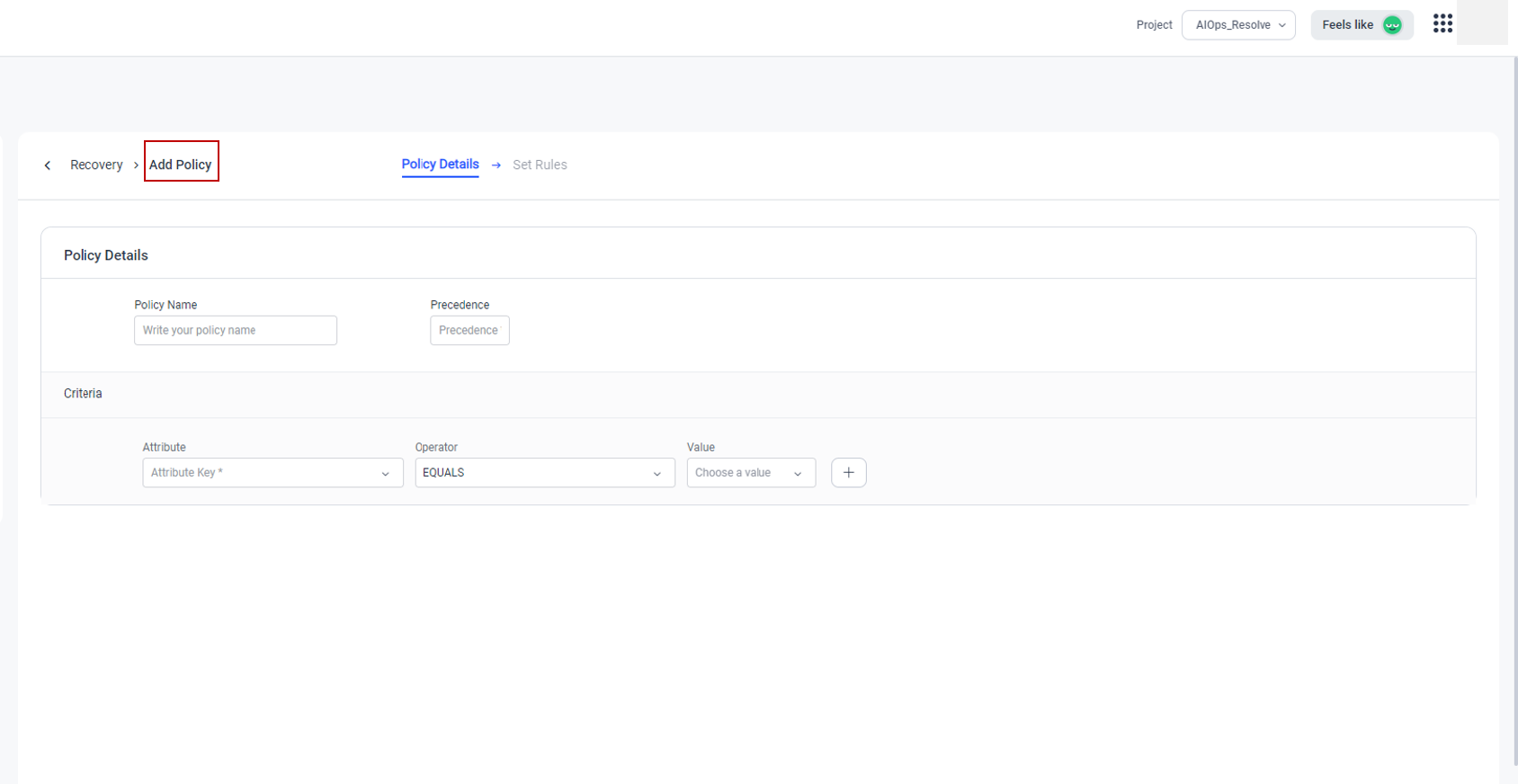
User can define the Recovery Policy Details as explained below:
|
Field Name |
Description |
|
Policy Name |
This field allows you to enter the Policy Name. Policy name should be unique. If you enter a name which was used earlier, it will show an error message on saving. |
|
Precedence |
Precedence field allows you to set priority to the policies that you are adding. |
|
Attribute |
This field allows you to select the attribute that is to be mapped against a value to consider an alert as recovery alert. You can select any of the available attributes from the dropdown. You can add multiple attributes against a single policy name by clicking the |
|
Operator |
This field allows you to select the operator for mapping the selected attribute with value. |
|
Value |
This field allows you to either enter or select the value based on the attribute selected. |

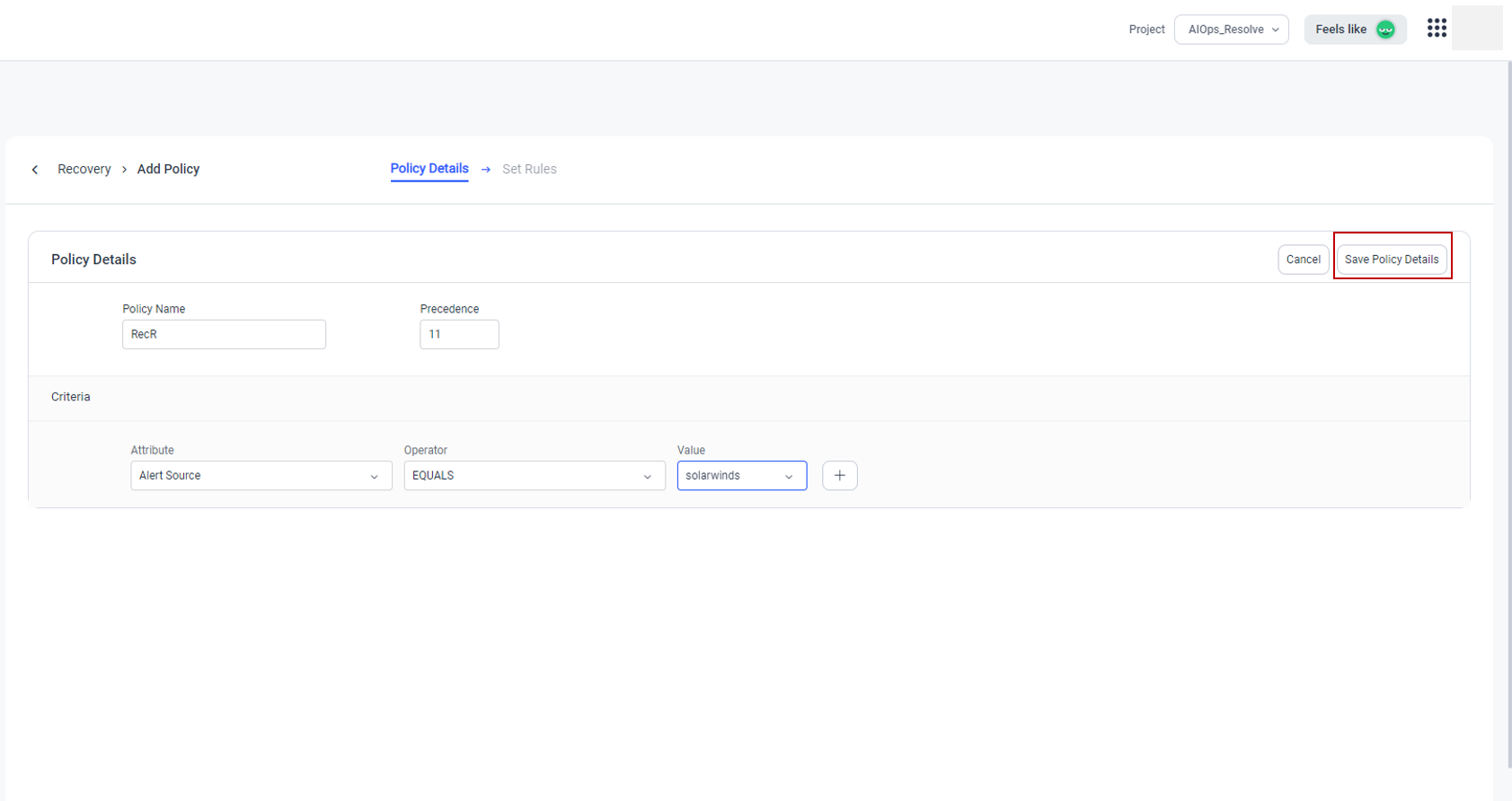
Click on Save Policy Details button. Save Policy Details pop up will appear.
On selecting Save and Exit option from the popup, the created policy will get saved and listed in the Policy listing screen. You can edit the policy from that screen later.
Click on Save and Continue button. Set Rules option will get enabled. You can set specific rules from this screen to further refine the corresponding policy.
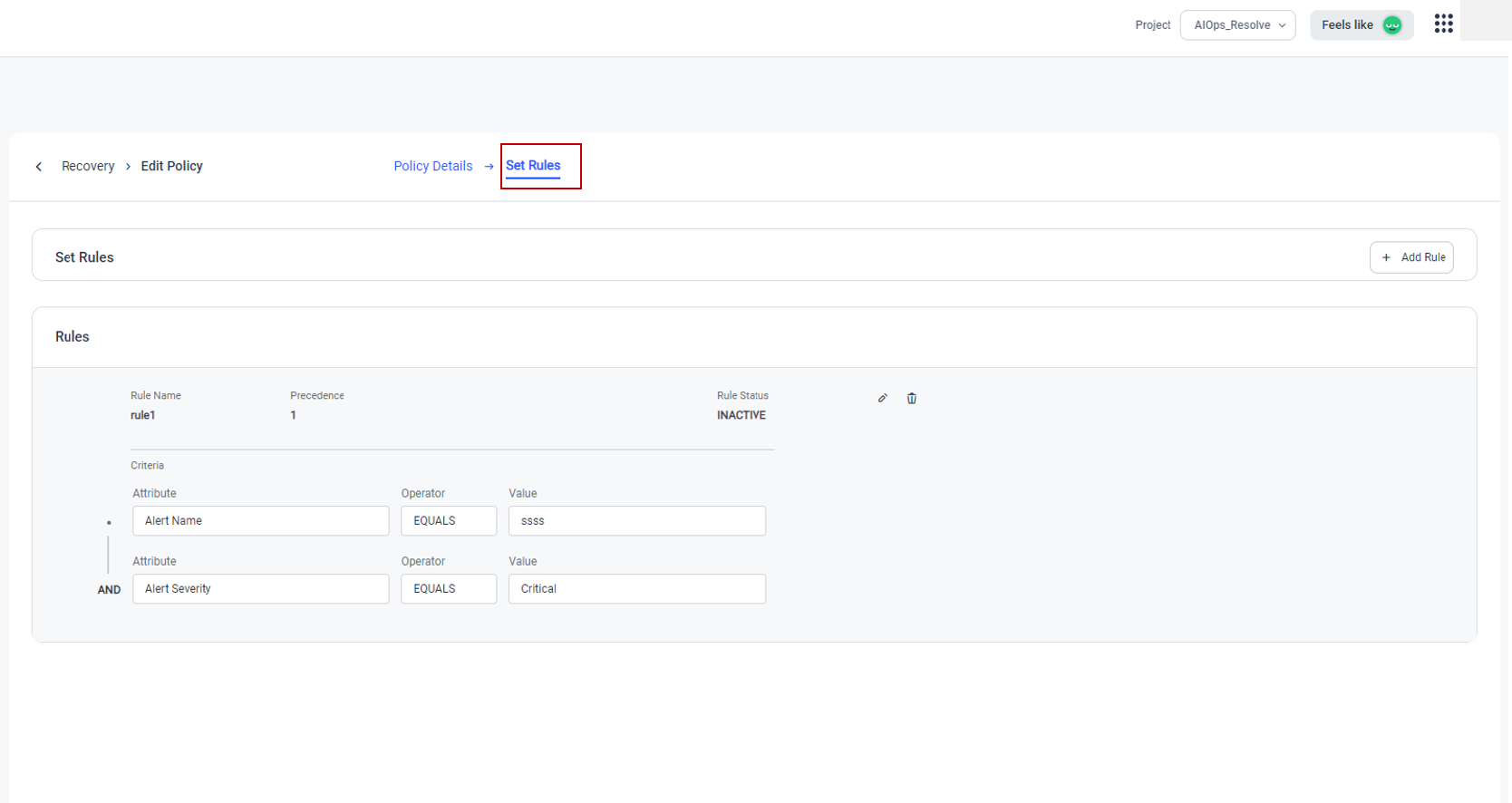
User can define rules for Recovery Policy as explained below:
|
Field Name |
Description |
|
Rule Name |
This field allows you to enter the Rule Name. Duplication of Rule Name within a policy will show an error message. |
|
Precedence |
Precedence field allows you to set priority to the created rules. Precedence will be given automatically to the rules on the chronological order of their creation. |
|
Rule Status |
This option allows the user to enable or disable the created rule. |
|
Attribute |
Attribute that is to be mapped against the created rule. You can select the attribute from the available list. Multiple attributes can be mapped against a single policy by clicking the |
|
Operator |
This field allows you to select the operator for mapping the selected attribute with value. |
|
Value |
This field allows you to either enter or select the value based on the attribute selected. |
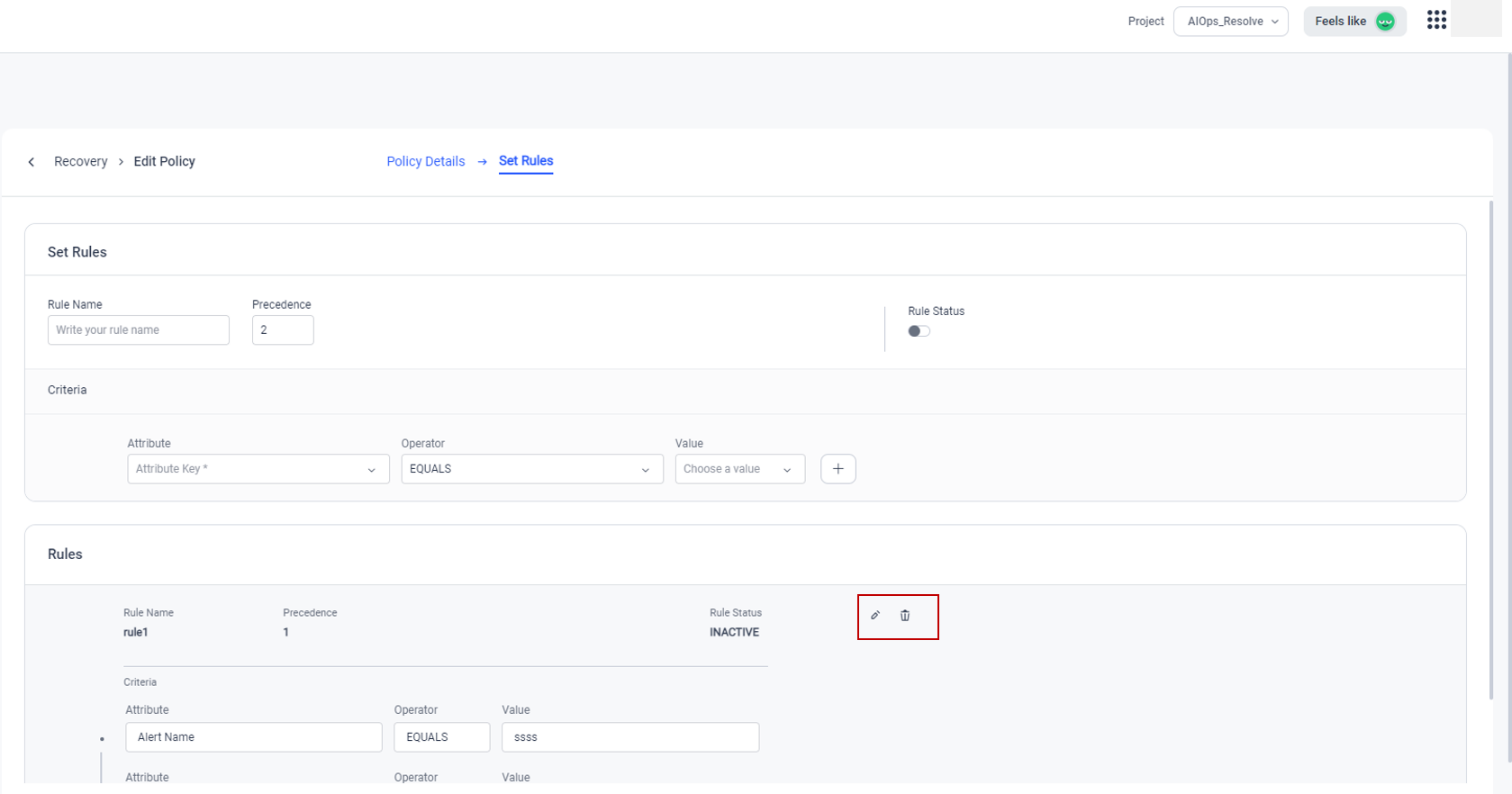
User can edit/delete any created rule by selecting the corresponding edit/delete option. User can activate or disable the rule with the Rule Status toggle button. Click on Save Rules button, the policy will get reflected on the Policy listing screen. Once all the rule settings are done, user can activate the policy by selecting the Status option from the Policy listing screen.
To activate a policy, at least one rule must be activated. Otherwise an error message will be displayed.
Copyright © 2025 UST . All Rights Reserved.